
29
Jul
Events
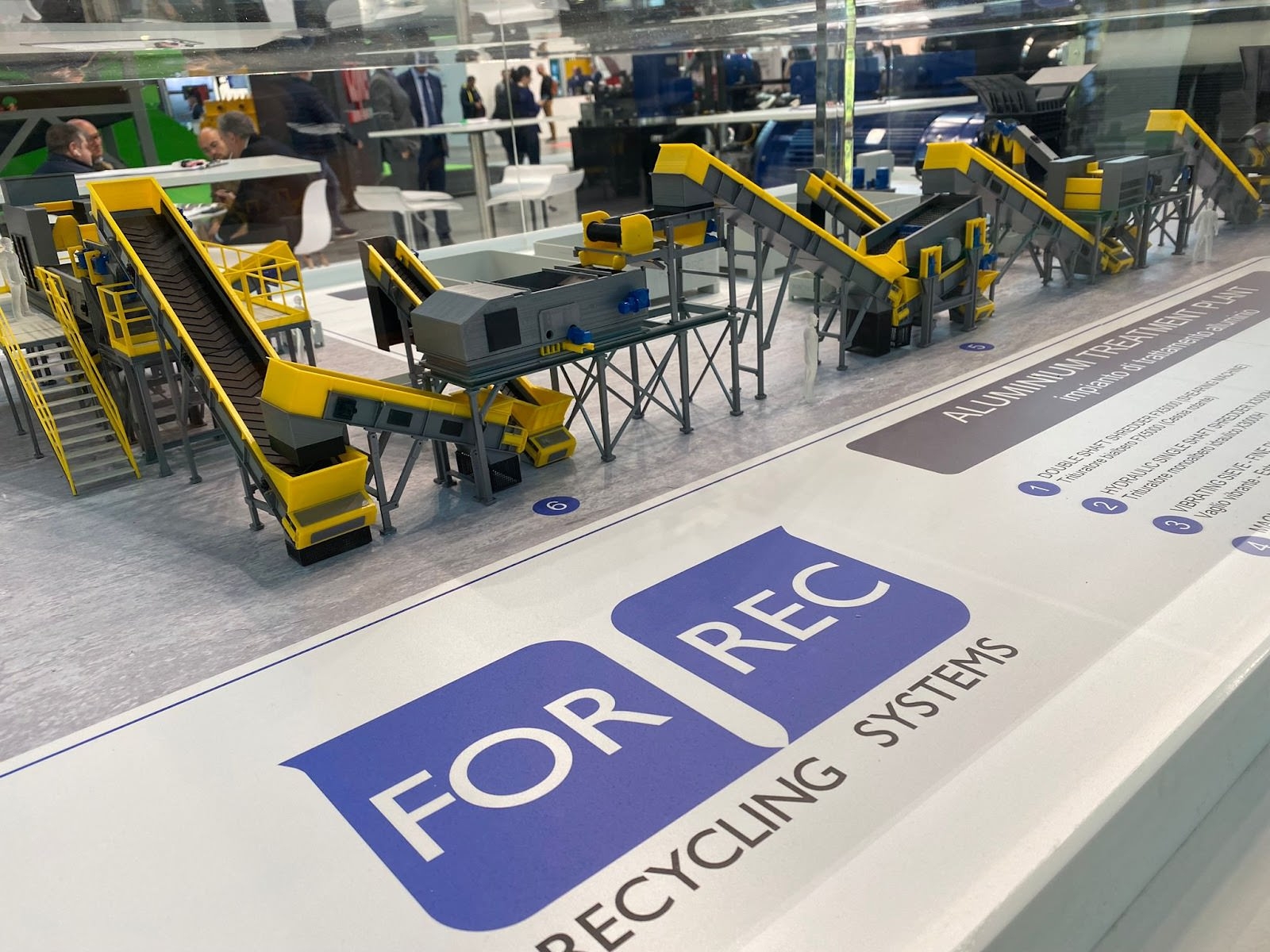
Ecomondo is one of the main international events dedicated to the green economy, circular economy, and technologies for resource management and recovery. Every year, the event brings together in Rimini companies, environmental sector operators, technology manufacturers, institutions, professionals, researchers, and stakeholders committed to developing new, more efficient, and sustainable industrial models.
For those operating in the waste treatment and recycling sector, Ecomondo primarily represents an opportunity to closely observe the evolution of technologies, interact with international manufacturers and operators, and explore new opportunities related to material valorization.
For FOR REC, which designs and manufactures machines and plants for the treatment of municipal solid and industrial waste, these topics represent the core of a constantly evolving sector.
Ecomondo is an annual international event dedicated to the ecological transition and the circular economy, organized at the Rimini Expo Centre.
The event creates a meeting point between industry, institutions, the research world, policymakers, waste management companies, and environmental technology manufacturers. Alongside the exhibition area, Ecomondo offers a comprehensive program of meetings, in-depth analyses, and conferences every year on topics concerning the ecological transition and the evolution of European environmental policies.
The value of the event, therefore, lies not only in the chance to see new machinery and industrial solutions but in the dialogue among all the actors involved in transforming models of production, consumption, recovery, and reuse of resources.
Among the most represented areas is the Waste as Resource sector, dedicated precisely to the collection, management, treatment, recovery, and valorization of waste. A principle well summarized by the area’s name itself: considering waste not just as something to be disposed of, but as a potential source of new materials.
The recycling sector is at the center of a profound industrial transformation.
The goal is no longer solely to reduce the amount of material destined for disposal, but to successfully recover increasingly homogeneous and valorizable fractions capable of re-entering production processes as new resources.
To achieve this result, plants capable of combining different processing phases are needed: volumetric reduction, shredding, sorting, separation, refinement, and preparation of the final material.
Ecomondo allows observing the entire supply chain and connecting the needs of operators who must process waste with the technologies available to do so effectively.
The principle of the circular economy consists of maintaining the value of products and materials for as long as possible.
In the waste sector, this means designing processes capable of separating the different fractions contained in a complex material and making them usable again.
Plastic, rubber, iron, copper, aluminum, and other components can acquire new value when correctly separated and prepared for subsequent recovery processes.
However, the quality of the result also depends on what happens in the initial phases of the plant.
This is where technologies such as industrial shredders, grinders, granulators, and hammer mills come into play, used to prepare the material for subsequent processing.
The Ecomondo program evolves from year to year following technological, regulatory, and industrial changes. However, some major themes now represent structural elements of the event.
These include the circular transformation of industrial sectors, the recycling of plastic, packaging, paper, textiles, and WEEE, the recovery of strategic and critical raw materials, eco-design, digitalization, the use of artificial intelligence, water management, the bioeconomy, and the development of new skills related to the green economy.
One of the themes most closely related to the FOR REC world is waste management and valorization.
Transforming a waste product into a reusable material requires a sequence of operations that must be designed based on the characteristics of the incoming material and the desired output.
The technological solution therefore changes depending on whether tires, electrical and electronic equipment, cables, metals, plastics, or industrial waste need to be treated.
The availability of raw materials and the ability to recover materials already present within end-of-life products are taking on increasing importance.
Particularly significant is the topic of strategic and critical raw materials, for which recovery, recycling, and reuse have permanently entered the topics addressed by the Ecomondo program.
For the recycling sector, this means increasing the ability to accurately separate the different fractions and produce secondary materials with characteristics increasingly suited for their subsequent use.
Industrial shredding is often one of the first steps in the treatment process.
Reducing the size of the material allows it to be prepared for subsequent operations, increases the effectiveness of separation systems, and simplifies the handling of the different fractions.
FOR REC develops different types of industrial shredders and machinery for waste treatment, which can be used as standalone units or integrated into complete lines and plants.
Grinders and industrial shredders allow for the volumetric reduction of the material.
Depending on the application, different configurations can be used, such as compact or heavy-duty grinders, twin-shaft or four-shaft shredders, rip shredders, or other solutions tailored to the specific characteristics of the waste.
When it is necessary to obtain smaller and controlled sizes, the process may include further processing stages through granulators.
The configuration always depends on the incoming material, the required particle size, and the objectives of the subsequent separation and recovery phases.
Hammer mills are applied in the treatment of particularly resistant and heterogeneous materials, such as metals, electric motors, and some types of WEEE.
The objective is to achieve a fragmentation that makes the subsequent separation of the different components possible.
The variety of materials present in the recycling world requires very different technologies and plant configurations.
FOR REC develops plants for numerous applications, including end-of-life tires, refrigerators, WEEE, aluminum, plastic, cables and electric motors, metals, wood, paper, and other types of industrial waste. The offering also includes solutions dedicated to the treatment of end-of-life photovoltaic panels.
Waste electrical and electronic equipment contains different materials that must be correctly separated.
WEEE recycling plants can involve different phases of opening, shredding, sorting, and separation aimed at recovering the main ferrous, non-ferrous, and plastic fractions.
In tire treatment, FOR REC tire recycling plants allow the material to be progressively processed and rubber, steel, and textile fiber to be separated, obtaining different particle sizes depending on the subsequent applications.
In scrap metal treatment, volumetric reduction yields a more homogeneous product suitable for subsequent processing, as well as improving handling and transport.
FOR REC uses different solutions for this application, including rotary shears and hammer mills, depending on the characteristics of the material to be processed.
Plastic materials may require multiple shredding and granulation phases to reach sizes compatible with subsequent separation, washing, or recovery operations.
Also in this case, the configuration depends on the type of polymer, the shape of the incoming material, and the required result.
Among the new supply chains gaining increasing importance is the treatment of end-of-life photovoltaic panels.
FOR REC plants for recycling photovoltaic panels are designed to separate and recover components such as aluminum, glass, silicon, and plastic fractions.
One of the main advantages of Ecomondo is the ability to connect actors occupying different positions within the supply chain.
Machinery manufacturers, recyclers, waste managers, utilities, industries, institutions, and research centers can discuss the concrete needs of the market and the technologies required to address them.
This dialogue becomes particularly important at a time when the sector must simultaneously respond to multiple needs: increasing recovery rates, improving the quality of secondary materials, containing consumption and processing costs, and developing solutions for increasingly complex materials.
It is no coincidence that the technical-scientific program of Ecomondo is updated every year and includes publications and contributions dedicated to the circular economy, ecological transition, sustainable energy, and resource management.
For FOR REC, Ecomondo represents a natural context in which to engage with sector operators and present solutions dedicated to waste shredding, treatment, and valorization.
The approach starts from the analysis of the material and the client’s objectives to identify the most suitable combination of technologies.
The machines can operate individually or be integrated into complex plants, where the different process phases are coordinated to achieve operational continuity, reliability, and a result consistent with production needs.
The goal is not simply to reduce the volume of a waste product, but to design a process that allows value to be recovered from the treated material.
Visiting Ecomondo with an already defined project makes the discussion with technology manufacturers much more concrete.
Before the event, it is useful to gather some information on the material to be treated: photographs or samples, composition, available quantities, initial size, required hourly capacity, and desired final result.
It is equally important to clarify which materials you want to recover and what level of quality the output must have.
These details help technicians quickly understand whether a single machine is sufficient or whether it is necessary to design a line consisting of multiple shredding, separation, and refinement phases.
Ecomondo thus becomes not only a place to see new technologies but a concrete opportunity to start designing or optimizing an industrial recycling process.
The circular economy requires rethinking the very concept of waste.
The more precise and efficient treatment systems become, the greater the possibility of recovering materials that can be reintroduced into production cycles.
The challenge for the coming years will therefore be to increase not only the quantity of recycled materials but also their quality, developing technologies capable of managing complex flows and new categories of end-of-life products.
In this scenario, events like Ecomondo play an important role because they allow industrial needs, research, innovation, and technology to be connected.
And it is precisely from the meeting of material knowledge, plant design, and treatment technology that a truly effective recycling system can be born.
Ecomondo 2026 will take place from November 3 to 6, 2026, at the Rimini Expo Centre. This year too, FOR REC will be present at the event to meet operators and sector professionals and present its solutions dedicated to waste treatment and valorization.
To find out the hall, booth, technologies presented, and all the information about FOR REC’s participation, refer to the dedicated article on FOR REC at Ecomondo 2026.
The page is updated with all the useful information to organize your visit and meet the FOR REC team during the event.
Do you want to explore a treatment or recycling project? Contact the FOR REC team to share the characteristics of the material to be treated and evaluate the solution best suited to your needs.
What is Ecomondo?
Ecomondo is an annual international event dedicated to the green economy, circular economy, environmental technologies, and sustainable resource management. It takes place at the Rimini Expo Centre.
When does Ecomondo take place?
Ecomondo is held every year in Rimini. The dates change depending on the edition. The 29th edition is scheduled from November 3 to 6, 2026.
Who is Ecomondo for?
The event is aimed at companies, waste management and treatment operators, utilities, technology manufacturers, recyclers, institutions, professionals, researchers, and industrial entities interested in the ecological transition.
What sectors are present at Ecomondo?
The main themes include waste management and valorization, circular economy, raw material recovery, water, bioeconomy, environmental monitoring, territory regeneration, and new technologies for the ecological transition.
Can you find waste recycling technologies at Ecomondo?
Yes. Waste treatment and valorization represent one of the central areas of the event. It is possible to meet manufacturers of machines, technologies, and plants intended for different phases of recycling processes.
What technologies does FOR REC offer for waste treatment?
FOR REC designs and manufactures industrial shredders, grinders, granulators, hammer mills, and complete plants for the treatment and valorization of different types of waste.
Is it possible to discuss a project with FOR REC during Ecomondo?
Yes. Ecomondo represents an opportunity to speak directly with the FOR REC team, present the characteristics of the material to be treated, and explore the possible configurations of a machine or a complete plant.

