WEEE waste treatment: technologies and solutions for photovoltaic panel recycling

23 July 2026
WEEE waste treatment: technologies and solutions for photovoltaic panel recycling

The industrial recycling landscape is facing an unprecedented transformation. Among the emerging material flows, WEEE treatment has taken on a central strategic relevance for companies wanting to maintain high standards of productivity and sustainability. In this scenario, managing the disposal of solar panels is positioned as one of the most technically complex flows in the entire sector. End-of-life photovoltaic modules, in fact, cannot be assimilated to traditional electronic waste; they require dedicated treatment lines and advanced engineering technologies to be correctly valorized.

Photovoltaic WEEE: A Category with Specific Treatment Needs

Understanding how to efficiently dispose of photovoltaic panels means, first and foremost, understanding the intrinsic nature of this waste. Unlike standard WEEE, solar panels present substantial operational differences that directly impact the design of recycling plants:

  • Format variability: photovoltaic panels can have very different dimensions and be intact or damaged, flat or curved. Therefore, feeding and shredding systems must be designed to efficiently accommodate and manage this wide variety of configurations, ensuring operational continuity and the absence of jams.
  • Stratified structure: a panel is a coupled assembly of glass, silicon cells, aluminum frames, copper, and protective plastics (such as EVA). Separating these layers requires targeted mechanical action.
  • Abrasiveness: the predominant presence of glass, which accounts for approximately 70% of the panel’s weight, generates significant wear on the shredding components. This requires the use of rotors, blades, and coatings designed to withstand particularly heavy operational conditions.

The main challenges in photovoltaic panel treatment

The crucial issues that a photovoltaic panel disposal company must resolve concern the clean separation of materials and the safeguarding of the plant itself. The main problems linked to the disposal of photovoltaic panels focus on:

  • Composite materials management: glass and plastic fractions are strongly bound together; inefficient separation drastically reduces the value of the resulting secondary raw material.
  • Need for controlled shredding: it is not enough to simply destroy the material. It is essential to accurately define and control the piece size (granulometry) in the early stages to allow downstream separation systems (magnetic, densimetric, or optical) to work at maximum efficiency.
  • Wear of mechanical components: without specific design measures, maintenance costs and frequent machine downtime risk compromising the economic sustainability of the investment.
  • Large volume management: it is essential that machines remain efficient even with heavy elements, to ensure operational continuity and constant output production.

To further explore the future scenarios related to this market, you can read our in-depth analysis: Photovoltaics and disposal: the sustainable future of solar panels.

20220707_075930

Industrial technologies for photovoltaic WEEE treatment

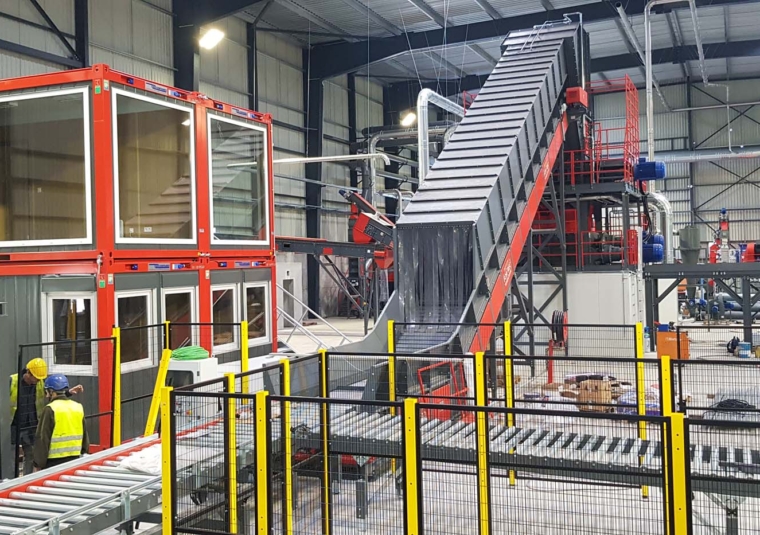
In the recycling market, companies often question operating costs: understanding how it works and how much it costs to dispose of solar panels depends directly on the efficiency of the chosen line. The critical point of the entire industrial process lies in the volumetric reduction phase.

To operate profitably, industrial machines capable of treating abrasive materials, guaranteeing production consistency, and performing millimeter control of the output size are required. In this context, the balance between primary and secondary shredding is the factor that determines the success of the recovery.

  • Primary shredding
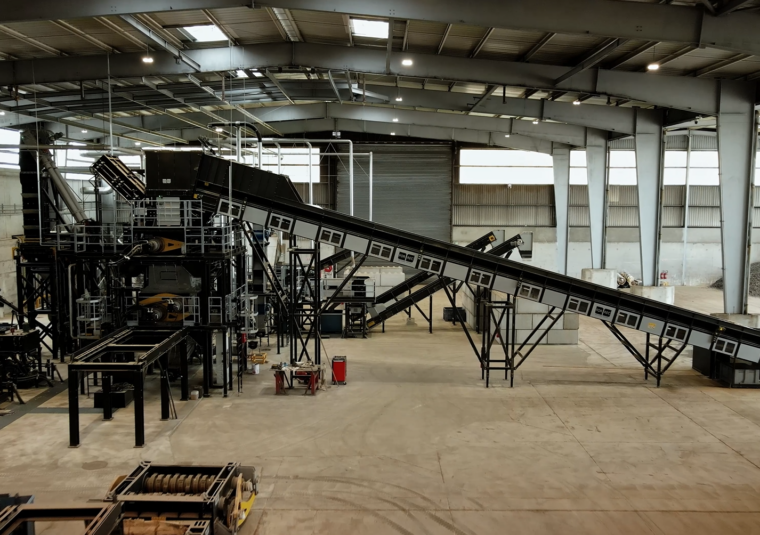
    Primary shredding must accommodate photovoltaic panels of any format and state of conservation, ensuring effective dimensional reduction and a regular piece size, which is indispensable for optimizing material flow along the entire treatment line. The solution developed by FOR REC is the TQ four-shaft shredder, specifically designed for managing complex, voluminous, and heterogeneous materials. Thanks to the interchangeable screen, it defines the ideal piece size in WEEE pre-treatment, ensuring constant flow rates.
  • Secondary laceration and material preparation
    Before the actual separation processes, the stratified flow must undergo a disaggregation action capable of reducing mechanical stresses on downstream machines. In this case, our solution is the LC crusher, designed for coupled and stratified materials. Its function is to open and separate the components without excessively shredding them, improving the efficiency of subsequent separation systems and supporting the maximum continuity of the production process.
pannelli-fotovoltaici-03

The role of shredding and plant reliability

Shredding is not a simple reduction operation, but the determining phase for the profitability of the entire plant. There is a direct relationship between the quality of the initial shredding and the purity of the downstream separated fractions (such as glass, silicon, and aluminum): a controlled size generates a drastic valorization of the final material on the market.

Given the extreme mechanical stresses caused by glass, structural reliability becomes a key economic factor. FOR REC plants respond to this need through:

  • Heavy-duty structures designed to resist the high abrasiveness of the treated material.
  • High wear-resistant components, designed to ensure a long operational lifespan.
  • Easily accessible cutting units, designed to minimize maintenance times and plant downtime.

How to choose a plant for photovoltaic panel treatment

The design of a recycling line must be calibrated on precise industrial objectives. In choosing the ideal configuration, the fundamental parameters to evaluate are:

  • Type and volumes of WEEE: quantitative analysis of the flows to be treated on an hourly or annual basis.
  • Required degree of purity: definition of the level of separation and cleanliness that one wants the outgoing materials to reach.
  • Robustness and maintenance: choice of machinery with low wear rates and easily replaceable components.
  • Flexibility: possibility of integrating shredding and laceration modules within existing lines to optimize the investment.

FOR REC designs tailor-made solutions capable of transforming the criticality of photovoltaic panel disposal into a fluid, efficient, and highly profitable industrial process.

Do you want to optimize your WEEE management system or discover the technical details of our lines for photovoltaics?