23
Jul
News
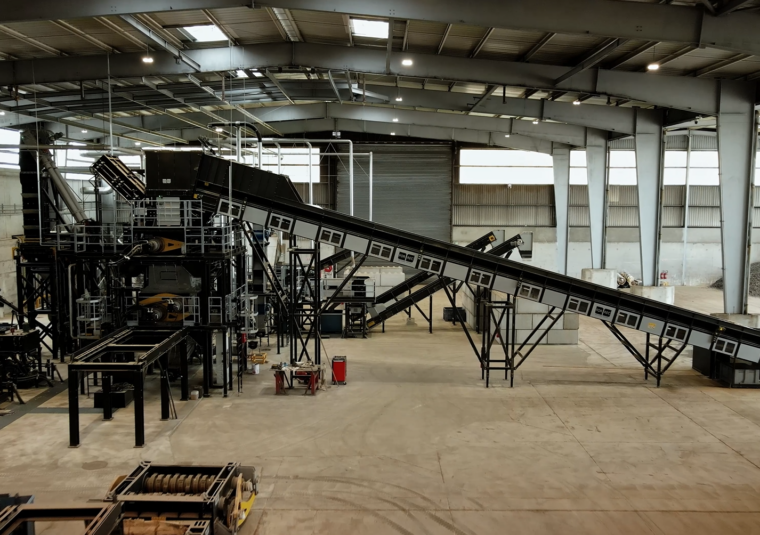
The recycling of a refrigerator requires a specific industrial process. Inside this type of equipment, there are indeed numerous recoverable materials, such as iron, aluminum, copper, and plastics, but also oils, refrigerant gases, and insulating foams that must be managed correctly during treatment.
For this reason, refrigerator recycling plants must combine different technologies and processing phases: from the initial decontamination to shredding, up to the separation and valorization of the individual fractions.
The goal is not only to dimensionally reduce the waste but to transform it into material flows that are as homogeneous and recoverable as possible, paying particular attention to the management of substances present in the cooling circuit and insulating foams.
End-of-life refrigerators fall into the category of waste electrical and electronic equipment (WEEE) and, due to their particular composition, require a specific and structured treatment process.
Unlike waste consisting primarily of a single material, a refrigerator is made up of very different components and materials: ferrous metals, copper, aluminum, plastics, insulating polyurethane, motor, and circuits, in addition to oil and refrigerant gases that must be managed appropriately.
For this reason, before shredding, it is essential to subject the equipment to a preliminary phase of decontamination and securing. The controlled recovery of gas and oil and the removal of components that require specific treatment make it possible to prepare the refrigerator for subsequent mechanical processing, reducing the risk of dispersion and favoring a more effective separation of recoverable materials.
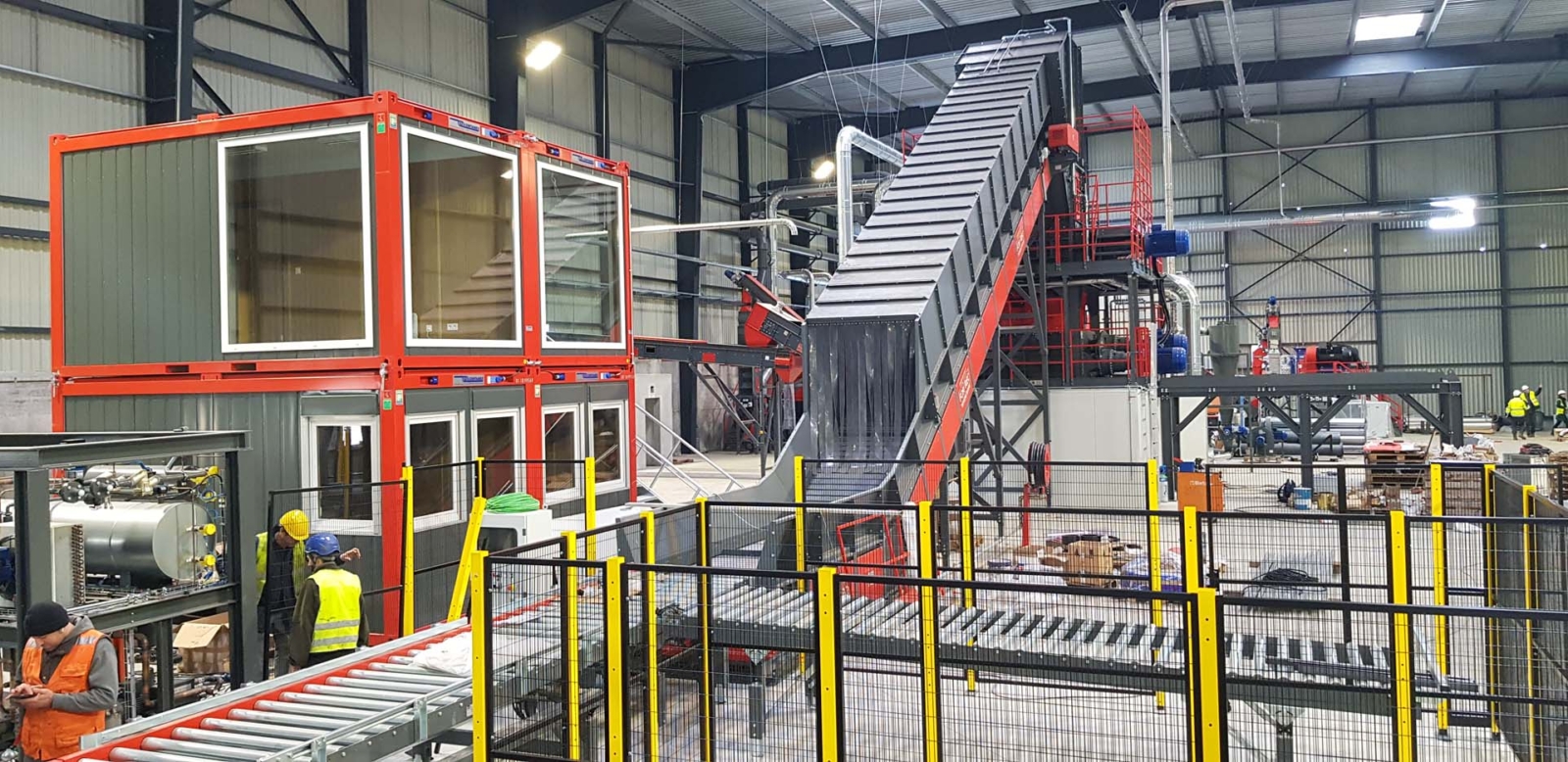
The process can be divided into several consecutive phases. Each step prepares the material for the subsequent processing and contributes to the quality of the recovered fractions.
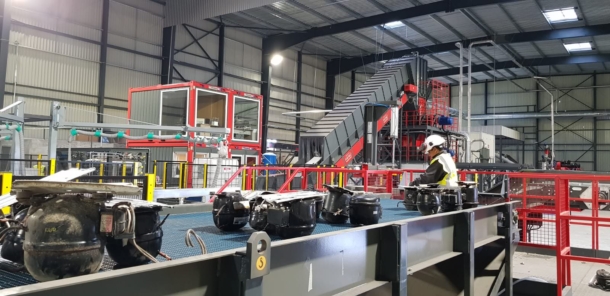
The first phase of the process is the decontamination of the refrigerator, which is necessary to prepare the equipment for subsequent mechanical treatment.
Before shredding, the refrigerant gas and oil present in the circuit are extracted and separated, while the motor is removed and sent to subsequent recovery operations.
This phase allows for the controlled management of the substances present in the equipment and reduces the risk of dispersion during processing.
A properly designed decontamination process therefore contributes to both the safety of the process and the overall efficiency of the plant, creating optimal conditions for the subsequent shredding and material separation phases.
Once decontamination is complete, the refrigerator moves on to the shredding and volumetric reduction phase, during which the structure of the equipment is progressively broken down to release the different materials that compose it.
Depending on the characteristics of the line and the required result, FOR REC can integrate different shredding technologies. The TB twin-shaft shredder, for example, is suitable for roughing and volumetric reduction operations, while the TQ four-shaft shredder allows for greater control of the output material’s size.
Obtaining an adequate particle size is essential to prepare the material for the subsequent sorting and separation phases. A uniform and controlled size actually facilitates the operation of downstream systems and helps improve the recovery efficiency of the various fractions.
Shredding, therefore, not only serves the function of reducing the volume of the refrigerator but represents a crucial step in optimizing the entire material recovery process.
Once shredding is complete and the different materials that make up the refrigerator are released, the flow enters the separation and sorting phase.
Ferrous metals are intercepted through special magnetic systems, which allow them to be separated from the other fractions present in the processed material.
The goal is to obtain flows that are as homogeneous as possible and free from contamination, improving the quality of the recovered materials and facilitating their subsequent valorization.
Magnetic separation therefore represents one of the fundamental steps of the process: after the extraction of ferrous metals, the material can be subjected to further sorting technologies, dedicated to the recovery of non-ferrous metals and the separation of plastics.
After the separation of ferrous metals, the flow still contains various recoverable fractions, including copper, aluminum, and plastics, which require further sorting operations.
To distinguish these materials, technologies can be integrated that exploit their different physical and electrical properties. Eddy current separators, for example, allow conductive non-ferrous metals, such as aluminum and copper, to be intercepted, separating them from non-metallic fractions.
The material is then subjected to a sequence of operations aimed at obtaining distinct flows that are more homogeneous and easily valorized.
The effectiveness of this phase also depends on the quality of the previous processing: controlled shredding and proper preparation of the material indeed favor a more precise separation and more efficient recovery of the various fractions.
After primary shredding, the material can undergo a further phase of dimensional reduction and refinement, useful for obtaining a particle size more suitable for subsequent separation processes.
The FMS granulator, also used in refrigerator treatment, is designed for the controlled grinding of the material and its preparation for downstream sorting phases.
Granulation allows for smaller and more uniform fractions, facilitating the release of materials that are still aggregated and making the subsequent separation of the different components more effective.
Shredding and granulation therefore perform complementary functions: the former acts on volumetric reduction and opening the waste, while the latter refines the particle size of the material, helping to improve the quality and efficiency of the recovery.
Among the main fractions we find:
The quality of the recovered material depends directly on the efficiency with which these fractions are released and separated.

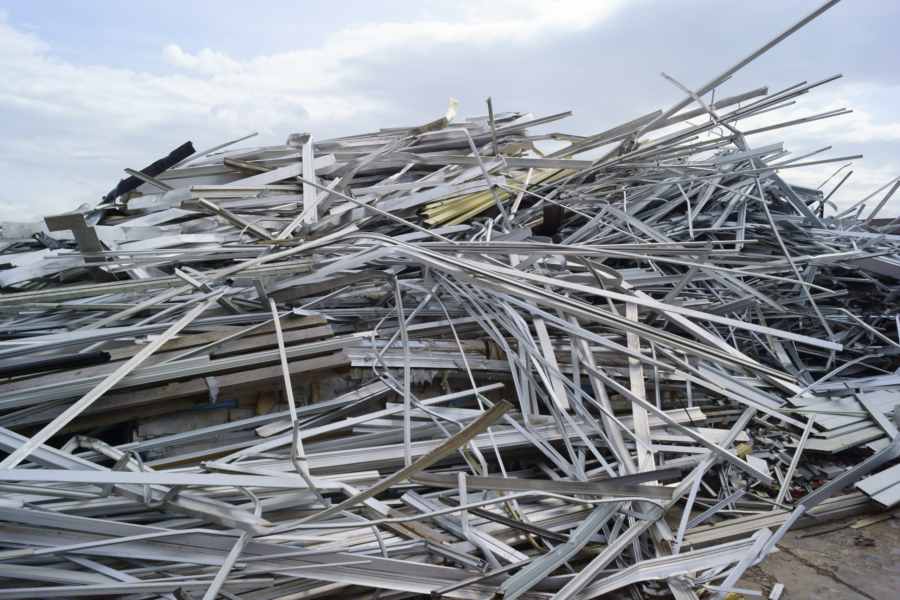
Shredding is only one of the phases of the recycling process. Once the refrigerator has been reduced to fragments of a controlled size, it is indeed necessary to separate the different fractions that make up the material, making them suitable for subsequent recovery and valorization processes.
To achieve this result, a complete plant integrates different technologies, including magnetic systems, eddy current separators, extraction systems, and sorting solutions based on the physical properties of the materials.
However, the effectiveness of the separation also depends on how the entire line is designed. Elements such as material size, flow regularity, and the correct sequence of the different technologies directly affect the quality of the fractions obtained and the presence of any contamination.
A well-designed configuration thus allows for more homogeneous and highly valorizable materials, simultaneously improving the efficiency of subsequent processing.
For this reason, a refrigerator recycling plant must be considered an integrated system, in which each phase prepares the material for the next and contributes to the overall yield of the process.
One of the aspects that most distinguishes refrigerator recycling from the treatment of other waste concerns the presence of polyurethane insulating foams and the expanding gases contained within them.
During the shredding and processing of polyurethane, residual gases can indeed be released; these must be intercepted and managed through dedicated extraction and treatment systems, preventing environmental dispersion.
In FOR REC plants, gas management can be configured according to the characteristics of the line and the specific needs of the project. Available solutions include treatment through thermal oxidation or recovery through condensation systems, which involve adsorption on activated carbon and the subsequent condensation of the gas using cryogenic technology.
The recovered polyurethane also undergoes specific treatment. Through pelletization, the material can be compacted while favoring the release of residual gas still present in the foams, until a more compact and stable fraction is obtained.
The correct management of polyurethane and expanding gases therefore represents an essential phase of the process and confirms the need to use plants specifically designed for refrigerator recycling, capable of integrating mechanical treatment, material separation, and controlled management of the substances present in the equipment.
There is no standard configuration suitable for every production reality. The design of a plant must start from the analysis of the incoming material, the volumes to be treated, and the recovery objectives to be achieved.
The main aspects to consider include:
The configuration of the line must therefore be defined based on actual operating conditions, identifying the most suitable combination of machines and technologies to ensure efficiency, process continuity, and the quality of the outgoing fractions.
The ability to customize the plant plays a particularly important role in refrigerator treatment, because volumes, material characteristics, and production objectives can vary significantly from one project to another.
A line intended to process large quantities of equipment, for example, has different needs compared to a plant designed for smaller volumes or for managing different categories of WEEE.
FOR REC designs tailor-made waste treatment plants, defining the configuration of the machines, handling systems, and separation technologies according to specific production needs.
The project can include a line dedicated exclusively to refrigerators or a more flexible configuration, in which certain technologies are integrated to treat different waste streams.
This approach allows for the development of solutions calibrated to concrete parameters such as productivity, material characteristics, available space, automation level, and recovery goals, creating a line consistent with the plant’s actual needs.

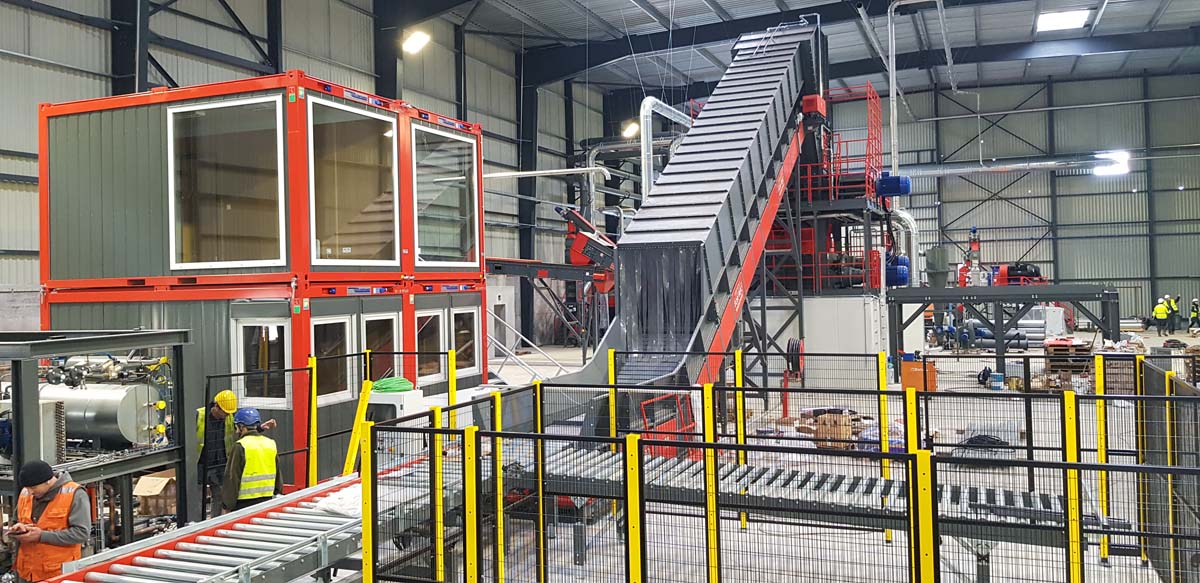
Refrigerator treatment requires an integrated process, in which different technologies work in succession to recover and separate the components present in the equipment.
After decontamination, necessary to remove oil and refrigerant gases, the refrigerator is shredded to promote the release of the various materials. This is followed by the separation phases of ferrous and non-ferrous metals, material refinement, and treatment of insulating components, with specific systems also dedicated to the management of polyurethane, gases, and dust.
The correct combination of these technologies optimizes material recovery and yields more homogeneous fractions, ready to be sent to subsequent valorization operations.
FOR REC designs and builds turnkey plants for refrigerator recycling, configuring shredding, granulation, separation, and gas treatment according to specific production needs.